

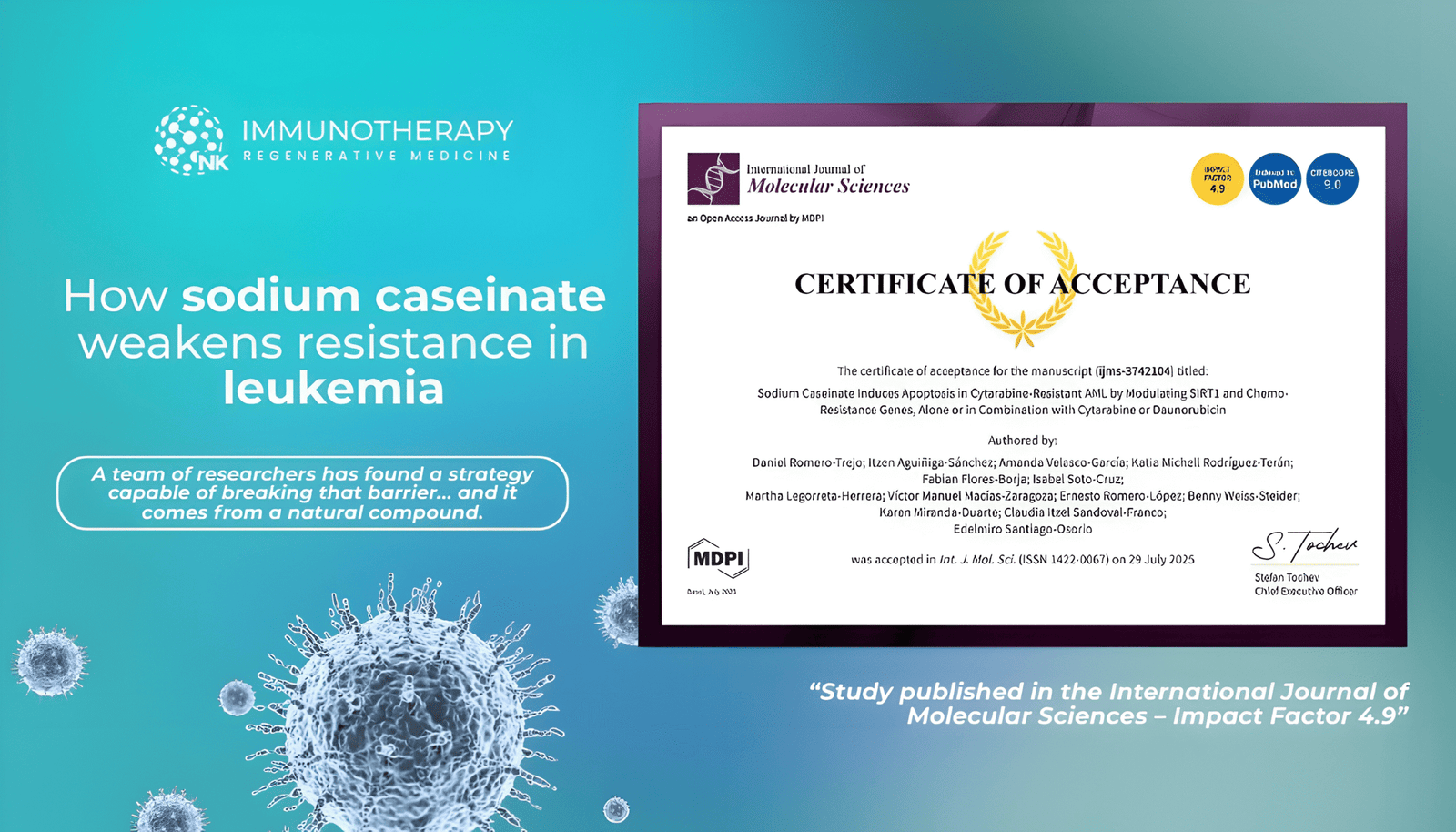
In acute myeloid leukemia (AML), one of the most persistent clinical challenges is chemoresistance, particularly to cytarabine (Ara-C) — a cornerstone drug in AML treatment protocols. When resistance develops, the effectiveness of standard regimens declines sharply, limiting therapeutic options and compromising patient outcomes.
A recent peer-reviewed study in the International Journal of Molecular Sciences highlights the potential of sodium caseinate, a milk-derived protein salt, as an adjuvant therapeutic approach to enhance the efficacy of conventional chemotherapy in drug-resistant AML.
Mechanism of Action
When administered alone or in combination with cytarabine or daunorubicin, sodium caseinate was shown to:
- Suppress proliferation of drug-resistant AML cells.
- Enhance apoptosis (programmed cell death) more effectively than monotherapies.
- Modulate resistance-related genes: downregulating SIRT1 and MDR1, while upregulating ENT1 and dCK — key molecules for cytarabine transport and activation.
Key Findings
- Extended survival in animal models: up to 50 days in resistant AML cases versus 40 days with chemotherapy alone.
- Synergistic activity: low-dose combinations (IC25) achieved the same inhibitory effect as higher doses, creating an opportunity to reduce chemotherapy-related toxicity.
- Selective cytotoxicity: targeted malignant cells without impairing healthy bone marrow progenitors.
Clinical Relevance
These findings suggest that sodium caseinate could serve as a promising adjunct in AML treatment, particularly for patients with limited response to cytarabine-based regimens. By potentially restoring drug sensitivity, this strategy may improve treatment efficacy, reduce chemotherapy dose requirements, and contribute to better quality of life.
This research adds a novel candidate to the growing field of precision-guided combination therapies aimed at overcoming resistance mechanisms in hematologic malignancies.